Introduction: The Synergy That Transforms Automation
In the Industry 4.0 era, manufacturers worldwide are seeking solutions that balance precision, efficiency, and scalability. These solutions elevate robotic positioners and gantry systems from standalone tools to transformative, integrated automation solutions. Robotic positioners specialize in multi-axis workpiece manipulation, adjusting angles and positions to optimize welding, assembly, or inspection with micron-level control. Gantry systems are overhead, bridge-like structures that operate in the X, Y, and Z axes. They deliver unmatched reach and a high load-bearing capacity ranging from kilograms to several tons. Gantry systems also provide stable motion across large workspaces while preserving valuable floor space. Together, these technologies overcome the limitations of standalone systems. The gantry’s mobility expands the operational range, and the positioner’s precision refines task execution. This combination unlocks faster cycle times, superior accuracy, and adaptability to the most demanding industrial needs.
Why Integrate Robotic Positioners and Gantry Systems?
This strategic investment solves core problems in modern manufacturing by leveraging the strengths of each component.
Expanded workspace and flexibility:
Gantry systems eliminate the limitations of fixed robotic arms. They can cover large, complex layouts without occupying critical floor space, which is essential for facilities with limited square footage. When paired with robotic positioners, which offer rotary or linear axis adjustments, the integrated system can access hard-to-reach areas and handle intricate part geometries with ease.
Real-world applications include:
Automotive manufacturing: Gantries move robots along entire vehicle frames and positioners rotate chassis components to ensure consistent weld quality on every joint.
Aerospace production: This combination manipulates oversized fuselage sections. Gantries transport robots across the length of the part and positioners tilt and rotate the part for precise drilling and riveting.
Enhanced Precision and Consistency
Robotic positioners deliver sub-millimeter accuracy, and gantry systems offer exceptional rigidity and minimal vibration. Together, they achieve repeatability ranging from ±0.1 mm to ±1 mm, depending on the configuration. This level of precision is essential for industries requiring strict quality control.
Electronics: In PCB assembly, for example, gantries move robots between cleanroom stations while positioners align circuit boards for microchip placement, reducing defect rates.
Medical Device Manufacturing: The integrated system dispenses medications into vials and assembles life-saving devices, ensuring ISO 13485 compliance by eliminating variability caused by human error.
Increased Throughput and Efficiency
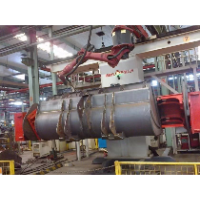
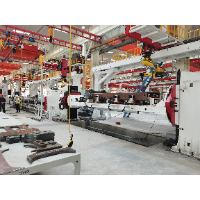
By automating robot movement and workpiece positioning, the integrated automation solution enables continuous operation and cuts cycle times by up to 30% in sectors such as metal fabrication. Unlike standalone robots, which require manual repositioning between tasks, the gantry-positioner combo can transition seamlessly between cutting, bending, and welding. The positioner adjusts the workpiece in real time while the gantry transports the robot. In logistics: Gantries can lift heavy pallets (up to several tons) across warehouses while positioners align loads for stacking or loading. This eliminates labor bottlenecks.
Scalability and Industry Adaptability
Modern manufacturing demands agility. Robotic positioner-gantry integrations scale effortlessly. Gantry tracks can be extended to cover larger workspaces. Positioners can be upgraded to handle heavier loads or more complex movements. This flexibility makes them ideal for small-batch custom production, high-volume assembly lines, and everything in between. They can adapt to various industries, including food and beverage (FDA-compliant packaging), defense (weapons system assembly), and heavy machinery.
Key Considerations for Successful Integration
Follow these Google-recommended best practices (backed by industrial automation experts) to maximize the ROI of your robotic positioner and gantry system integration:
Compatibility and Communication: Ensure that the positioner, gantry, and control software support standard protocols, such as Ethernet/IP and PROFINET, for seamless data exchange. This prevents collisions and ensures synchronized movement, which is critical for precision tasks.
Load Capacity and Stability: Calculate the total load (robot, workpiece, and tools) and select a gantry with sufficient load-bearing capacity and rigidity. Unstable systems compromise precision and increase maintenance costs.
Safety and Regulatory Compliance: Equip the system with emergency stops, light curtains, and collision detection software. For regulated industries, such as medical and food, ensure compliance with industry-specific standards, such as ISO 13485 and FDA regulations.
Calibration and Programming: Use precision calibration tools to align the axes and leverage offline programming software to optimize the motion paths. This reduces setup and downtime.
Maintenance and Support: Choose a supplier that offers proactive maintenance, such as lubrication and sensor checks, as well as 24/7 technical support. Regular maintenance extends the system's lifespan.
Real-World Success Stories
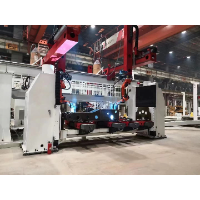
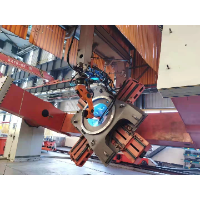
Global manufacturers trust integrated robotic positioner-gantry systems to deliver results.
Automotive: A leading car manufacturer reduced body welding cycle time by 25% and defect rates by 40% by using our integrated solution.
Aerospace: A manufacturer of aircraft components reduced fuselage assembly time by 30% with zero rework in 12 months.
Electronics: A semiconductor firm reduced PCB assembly defects by 50% and increased throughput by 20%.
The Future of Integrated Automation
As Industry 4.0 continues to evolve, robotic positioners and gantry systems will grow in power. This growth is driven by trends such as:
AI-Powered Optimization: Machine learning will optimize motion paths and predict maintenance needs.
Collaborative Robotics: Cobot-compatible integrations enable safe human-robot collaboration.
Digital Twin Technology:
Digital Twin Technology: Virtual replicas test workflows before deployment.
Conclusion: Elevate Your Automation with Robotic Positioner-Gantry Integration
Integrating robotic positioners and gantry systems offers more than just a technical upgrade; it provides a competitive advantage. By combining the gantry’s reach and load capacity with the positioner’s precision, businesses can achieve higher productivity, better quality, and long-term cost savings. Typically, ROI is achieved within one to three years. This solution adapts to your needs, whether you’re streamlining automotive assembly, enhancing aerospace precision, or automating logistics.
Are you ready to transform your operations? Contact us now!
 Case Study: Successful Implementation of Robotic Positioners in Automotive Manufacturing
 Future Trends in Robotic Positioners and Automation Systems
 Common Challenges in Implementing Robotic Positioners and How to Overcome Them
 Integrating Robotic Positioners and Gantry Systems for Optimal Automation
